

The Dr Erika Pohl-Ströher Collection: a collector’s journey in three auctions
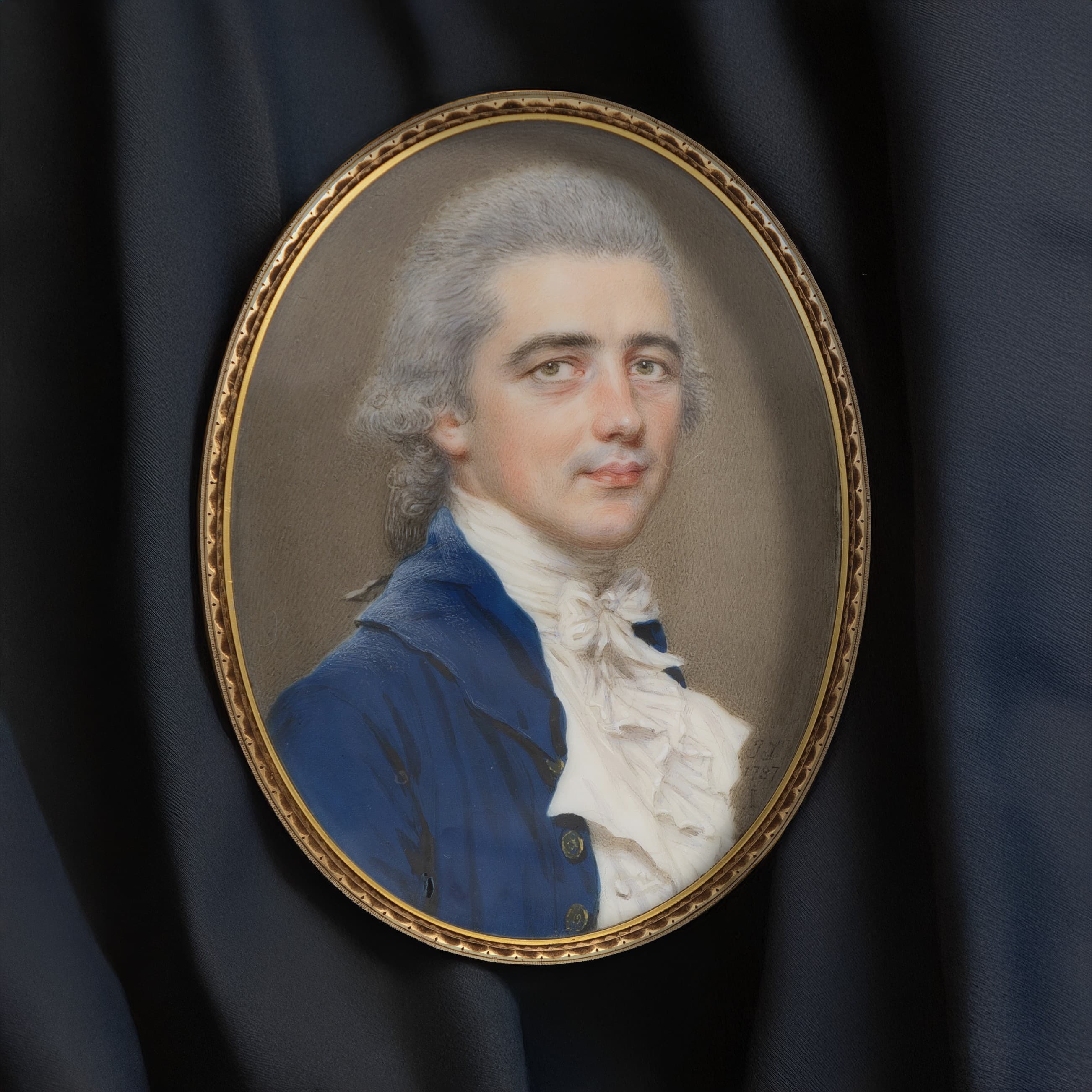
The granddaughter of Franz Ströher, founder of what later became Wella AG, Erika Pohl-Ströher made a name for herself as a patron and passionate collector. Her enthusiasm for miniatures was kindled when, at an art fair, she happened upon the portrait of a young girl with a doll — it caught her attention because she was also interested in dolls. From then on, over almost forty years, she built up one of the most important private collections of portrait miniatures, at just the moment when major collections of earlier generations — including David-Weill, Clore and Holzscheiter — were coming onto the market.
The roughly 850 portraits cover every subject of the genre, from the likeness of a prince to the intimate family scene, and all European traditions and techniques: watercolour and gouache on ivory, oil on paper, enamel and reverse glass painting. At times the elaborately worked frames are works of art in their own right. We had the privilege of auctioning this collection in three parts — a journey across three auctions.
Part 1: the opening becomes a white-glove auction
The first part at the Spring Auction 2024 exceeded all expectations: all 211 lots found new owners, and the estimates were clearly surpassed — in the auction world, such a complete sell-out is known as a «white glove» sale.
Part 2: John Smart nine times over
The second part at the Autumn Auction 2024 brought nine works by the miniaturist John Smart, including two marked «I» for India from his years on the subcontinent. These were joined by splendid gold boxes, a rare miniature of Frederick II by Anton Friedrich König — a comparable example hangs in Schloss Charlottenburg — and an important double miniature by Richard Cosway with fully documented provenance. This part, too, sold in its entirety.
Part 3: the finale of a collection
With the final 369 lots at the Spring Auction 2025 we brought the collector’s journey to a close. The final part spanned four centuries of European portraiture — including a miniature by Heinrich Friedrich Füger shown at the Albertina in 1965, one of only around fifty known enamel works by Jacques Thouron, and Jean Désiré Muneret’s portrait of the actress Mademoiselle Dupont.
When the hammer falls for the last time, a chapter ends — and collectors are given the chance to carry its history forward. The sale of the Pohl-Ströher Collection ranks among the most extensive collection projects our house has undertaken.